Link Building
How Link-Building Strengthens SEO Authority in 2026

Admin
·7 min read
Want to know if your site has this issue? Run a free technical SEO audit and get results in minutes.
Run a Free SEO Audit →Key Takeaways
Link-Building remains one of the strongest ranking factors because backlinks signal trust and relevance. Search engines use external links as endorsements. The more high-quality references your site earns, the stronger your authority becomes.
Businesses that ignore Link-Building often struggle to compete, even with excellent content.
SEO Reporty’s audit tools help identify link gaps and opportunities by scanning domain authority signals, toxic backlinks, and missed internal structure opportunities.
Internal Link Suggestion: Visit /seo-audit to identify link-related technical weaknesses.
Backlinks strengthen your entire domain, not just the page receiving them.
When authority increases:
Pages rank faster
New content indexes quicker
Internal pages gain inherited ranking power
Search visibility expands across keyword clusters
External Reference: Google Search Central documentation on link best practices.
The strongest Link-Building begins with assets people want to reference.
Examples include:
Original research reports
Industry benchmark studies
SEO templates and frameworks
Step-by-step tutorials
Interactive tools
When your content solves real problems, backlinks happen naturally.
A useful example is publishing a “2026 Technical SEO Checklist” that agencies reference in strategy articles.
This attracts links because it provides evergreen value.
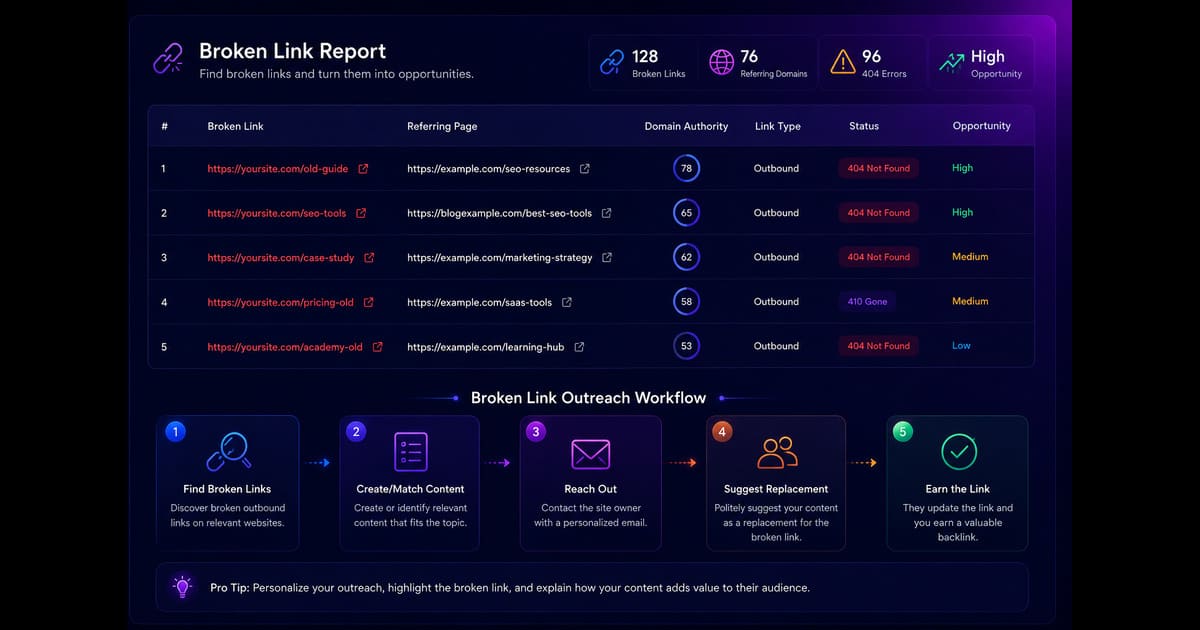
Broken link outreach identifies dead links on authoritative websites and suggests your replacement content.
This works because site owners want to fix poor user experiences.
Here’s the process:
Find broken outbound links using SEO tools
Create or match replacement content
Contact the webmaster professionally
Offer your resource as a replacement
External Reference: Ahrefs broken link building methodology.
Modern Link-Building succeeds through relationships.
Engage with:
Industry publishers
Podcast hosts
SaaS communities
SEO thought leaders
Guest collaboration often produces natural backlinks with stronger trust signals.
Internal Link Suggestion: Explore /blog/ for content collaboration inspiration.
Broken internal links stop authority flow and hurt crawl efficiency.
Common causes include:
Deleted pages
Changed URLs
Migration mistakes
Incorrect redirects
SEO Reporty detects these instantly and recommends fixes.
Fixes include:
Restoring missing content
Adding 301 redirects
Updating references sitewide
Repairing navigation structures
Sometimes valuable backlinks point to outdated URLs.
This wastes earned authority.
Recover value by redirecting old pages to updated equivalents.
A clean redirect map preserves trust and transfers authority effectively.
Internal Link Suggestion: Use /features/ to automate redirect monitoring.
Routine audits reveal:
Redirect chains
404 errors
Orphan pages
Crawl inefficiencies
Quarterly link maintenance keeps authority flowing efficiently.
External Reference: Google documentation on crawl efficiency and redirects.
Internal links should support strategic pages:
Core services
Revenue-driving landing pages
Pillar content
High-converting resources
Link supporting articles back to these assets consistently.
This concentrates authority where rankings matter most.
For example:
A blog post about technical SEO should naturally link to your SEO audit service page.
That reinforces relevance and strengthens conversions.
Topic clusters organize related content around central pillar pages.
Example:
Pillar Page: Complete Link-Building Guide
Supporting Posts:
Broken link strategies
Anchor text optimization
Authority scoring methods
Backlink outreach templates
This structure improves crawl understanding and topical authority.
Search engines reward well-organized expertise.
Too many links dilute value.
Focus on relevance and clarity.
Audit pages with excessive links and simplify where needed.
Anchor text should feel natural.
Good examples:
Learn more about technical SEO audits
Explore our SEO reporting tools
Review backlink performance reports
Avoid repetitive exact-match anchors like:
Best Link-Building tool
Cheap Link-Building software
Over-optimization increases risk.
Search engines recognize unnatural patterns.
Healthy anchor distribution includes:
Branded anchors
Partial-match anchors
Generic anchors
Natural sentence anchors
This appears organic and trustworthy.
Anchor text should accurately preview destination content.
Misleading anchors create bounce rates and trust loss.
For example:
If linking to an audit dashboard, use “View your SEO audit report” rather than vague phrases like “Click here.”
Clear anchors improve usability and engagement.
SEO audits uncover:
Pages lacking authority
Weak internal pathways
Anchor optimization opportunities
Backlink losses
Fixing these systematically compounds growth.
SEO Reporty automates this process, making advanced Link-Building accessible for agencies and business owners.
Track:
Domain authority improvements
Referring domain growth
Broken link recovery
Anchor diversity trends
Internal link distribution
Consistent reporting ensures Link-Building becomes strategic, not reactive.
Internal Link Suggestion: Learn more through /blog/ advanced SEO reporting guides.
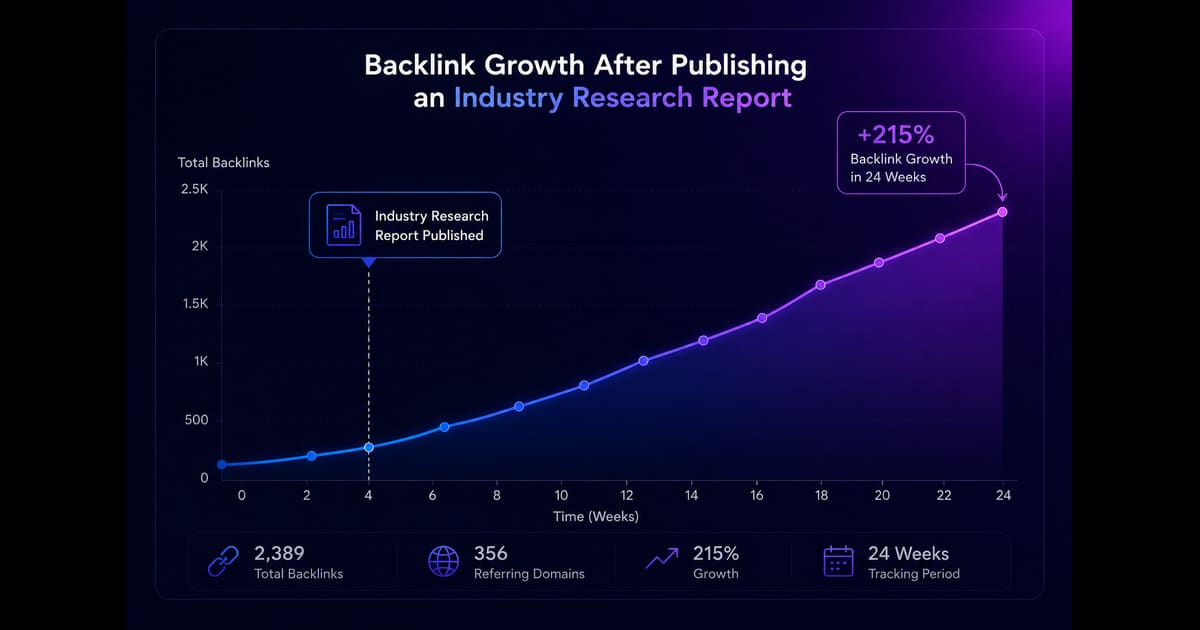
Digital PR has become one of the most effective Link-Building strategies for competitive industries like SaaS, ecommerce, finance, and marketing.
Instead of directly asking for backlinks, brands create newsworthy content that publishers naturally reference.
Examples include:
Industry surveys
Data-driven reports
Trend predictions
Expert opinion roundups
Interactive calculators
When journalists and bloggers cite your research, your website earns high-authority backlinks that significantly improve trust signals.
For example, an SEO agency could publish a report analyzing ranking trends across 1,000 ecommerce websites. Industry blogs and publishers may then reference those findings in their own articles.
This approach creates sustainable authority growth over time.
Many websites may already mention your business without linking to it.
These are easy Link-Building opportunities because the publisher is already familiar with your brand.
Use monitoring tools to discover:
Brand mentions
Product references
Founder interviews
Case study citations
Then politely request that the mention includes a clickable link.
This strategy often produces quick wins because the relationship already exists.
Google increasingly evaluates Experience, Expertise, Authoritativeness, and Trustworthiness when ranking content.
High-quality backlinks reinforce all four signals.
Links from respected industry websites demonstrate:
Credibility
Industry relevance
Thought leadership
Brand trust
For example, a backlink from a respected marketing publication carries far more weight than dozens of low-quality directory submissions.
Businesses operating in competitive niches should prioritize editorial links over mass outreach campaigns.
External Reference: Google Search Quality Evaluator Guidelines.
Some websites promise hundreds of backlinks for extremely low prices.
These links often come from:
Private blog networks
Spam directories
Low-quality forums
Irrelevant websites
Search engines are increasingly effective at identifying manipulative patterns.
Instead of chasing volume, focus on acquiring links that genuinely improve user value and brand authority.
A backlink from a relevant website usually provides stronger ranking signals than an unrelated high-authority page.
For example:
A digital marketing blog linking to an SEO audit platform is highly relevant.
A random entertainment website linking to the same page offers much less contextual value.
Relevance improves topical authority and strengthens semantic understanding for search engines.
Repeated exact-match anchors create an unnatural backlink profile.
Healthy profiles contain a mix of:
Brand mentions
Natural phrases
Partial keywords
Generic anchors
URL anchors
Regular audits help identify anchor text imbalances before they impact rankings.
Many websites have pages with strong content but weak authority signals.
SEO Reporty helps uncover:
Pages lacking internal links
Pages with low backlink support
Orphaned content
Weak anchor distribution
These insights allow businesses to improve rankings strategically instead of relying on guesswork.
Not every backlink improves SEO performance.
SEO Reporty helps evaluate:
Referring domain quality
Spam indicators
Anchor diversity
Authority trends
Link growth over time
This makes it easier to focus on high-impact opportunities while avoiding harmful backlinks.
Internal linking is often overlooked because it becomes difficult to manage as websites grow.
SEO Reporty simplifies this by identifying:
Related content opportunities
Missing contextual links
Weak page connections
Crawl depth problems
Improved internal structure helps distribute authority more efficiently across the entire site.
Effective Link-Building is a long-term investment, not a one-time task.
Sustainable strategies include:
Publishing expert-level content
Maintaining strong technical SEO
Building publisher relationships
Creating valuable resources
Improving user experience
Businesses that consistently provide value naturally attract stronger backlink profiles over time.
Content alone is rarely enough.
Promotion matters equally.
A strong process includes:
Publishing high-quality content
Sharing through email outreach
Promoting on professional communities
Building industry relationships
Repurposing insights into social content
The combination of content and promotion dramatically increases backlink opportunities.
Successful Link-Building campaigns rely on continuous measurement.
Monitor metrics such as:
Organic traffic growth
Keyword ranking improvements
Referring domain increases
Authority score changes
Internal link distribution
Conversion improvements
Strong Link-Building strategies combine technical precision, valuable content, and long-term authority building. Businesses that focus on relevance, user experience, and strategic internal linking consistently outperform competitors using outdated SEO tactics. By combining backlink acquisition with regular audits and structured internal linking, brands create sustainable organic growth that continues delivering value over time.
See exactly how this affects your site — our audit surfaces issues like these in minutes.
Check your site for this issue →Final Thoughts
Link-Building in 2026 is no longer about quantity. Sustainable growth comes from quality backlinks, healthy site architecture, and thoughtful internal linking. Businesses that audit their link ecosystem consistently outperform competitors relying on outdated tactics. The smartest strategy is combining proactive outreach with regular technical audits. Tools like SEO Reporty simplify this process by exposing hidden opportunities, fixing structural issues, and helping you scale authority-building efforts with confidence.
FAQ
Related posts
More articles in the same topic cluster to help you go deeper.
Free tool
Get a full technical, performance, and AI SEO audit — prioritized and ready to act on. No credit card required.