Step-by-Step SEO Workflows: Tools & Expert Tips

Admin
·8 min read

Want to know if your site has this issue? Run a free technical SEO audit and get results in minutes.
Run a Free SEO Audit →Key Takeaways
- Structured SEO workflows help teams scale optimization tasks efficiently without missing critical ranking opportunities.
- Comparing SEO tools ensures you choose solutions that save time while improving data accuracy.
- Automation and documentation reduce repetitive work and make SEO processes easier to replicate.
- Strategic workflows improve rankings by aligning research, content optimization, and technical SEO.
- Using the right tools and processes helps marketers deliver consistent SEO results faster.
Building a Step-by-Step SEO Workflow
Why Structured SEO Processes Matter
Search engine optimization is no longer a series of disconnected tasks. Modern SEO success depends on clear workflows, the right tools, and proven strategies that allow teams to work efficiently while producing measurable results.
Without a structured process, SEO professionals often waste time repeating tasks, overlooking opportunities, or using tools inefficiently. By building step-by-step SEO workflows, marketers can streamline keyword research, technical analysis, and content optimization.
A structured SEO workflow ensures that important tasks are not skipped, teams work efficiently and consistently, results are measurable and repeatable, and projects can scale across multiple websites.
A Basic SEO Workflow Framework
A reliable SEO workflow typically includes several stages that build on one another.
Keyword and competitor research
Technical website audit
Content optimization and creation
Internal linking improvements
Performance monitoring and reporting
Each stage feeds into the next, ensuring that optimization decisions are based on real data rather than assumptions.
For example, keyword research informs content creation, while technical audits ensure that search engines can properly crawl and index that content.
Comparing Essential SEO Tools
Keyword Research Tools
Keyword research tools help identify search demand, competition levels, and ranking opportunities.
Popular types of tools include platforms that provide keyword search volume data, competitive analysis tools that reveal ranking gaps, and Google-based tools that show real search performance.
Google provides detailed guidance about how search systems interpret content and ranking signals in its official documentation:
https://developers.google.com/search/docs/fundamentals/seo-starter-guide
Technical SEO Audit Tools
Technical SEO tools analyze websites for crawlability issues, broken links, duplicate content, and performance problems.
Common capabilities include:
• Site crawling
• Indexation analysis
• Core Web Vitals monitoring
• Structured data validation
Practical SEO Workflow Examples
Example 1: Keyword-Driven Content Optimization
One of the most effective workflows focuses on improving existing content using keyword research data.
A simple step-by-step process looks like this:
Identify pages that receive impressions but few clicks
Analyze search queries driving impressions
Expand content to target related keywords
Improve headings and internal linking
Update metadata and monitor rankings
Image suggestion:
An infographic showing a workflow from keyword research → content update → ranking improvement.
Google Search Console documentation explains how performance reports reveal keyword opportunities:
https://support.google.com/webmasters/answer/7576553
Example 2: Technical SEO Audit Workflow
Another highly effective workflow focuses on performing regular technical audits to identify issues that impact rankings.
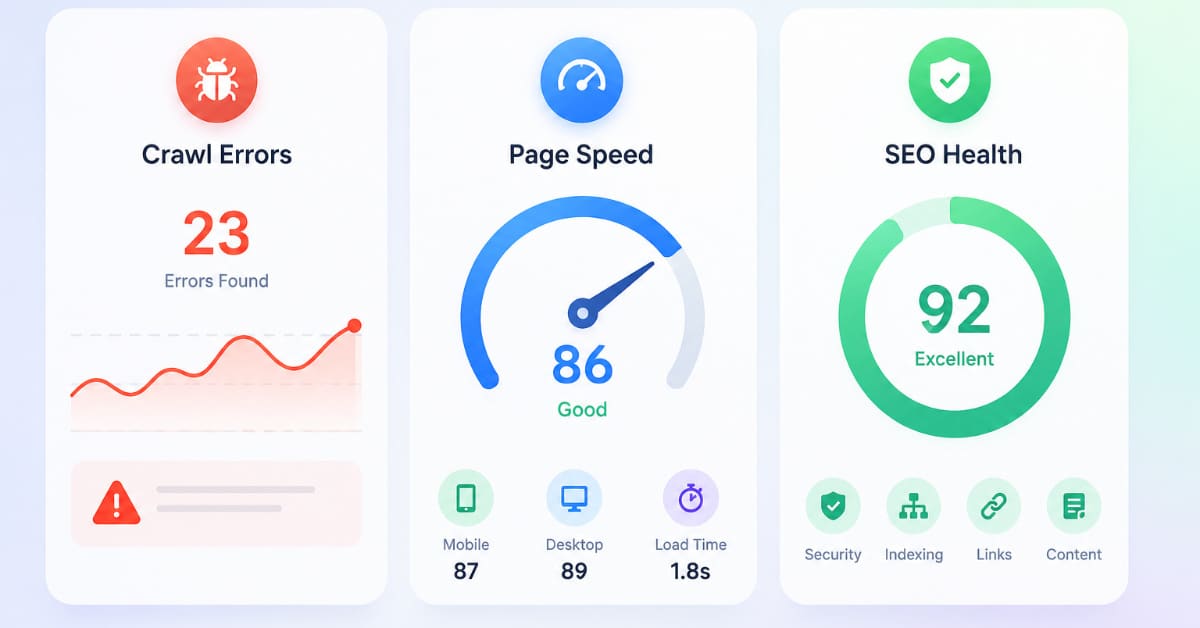
Step-by-step technical audit workflow:
Crawl the entire website using an SEO auditing tool
Identify indexation issues
Detect duplicate titles and meta descriptions
Analyze page speed and Core Web Vitals
Fix broken internal links
Improving Efficiency with SEO Automation
Automating Repetitive SEO Tasks
Automation allows SEO professionals to reduce manual work while maintaining consistent processes.
Tasks that can often be automated include:
• Website audits
• Rank tracking
• Backlink monitoring
• SEO reporting
Automation tools generate reports quickly and highlight key insights, allowing teams to focus on strategy rather than repetitive analysis.
If you're building scalable SEO workflows, automated reporting tools can dramatically improve productivity.
Explore automated reporting strategies here:
/blog/
Creating Repeatable SEO Systems
The most successful SEO teams rely on documented systems rather than ad-hoc strategies.
Repeatable SEO systems help organizations:
• Scale optimization across many pages
• Maintain consistency between projects
• Train new team members faster
• Reduce human errors
Organizations that follow structured SEO systems consistently outperform those using informal or improvised strategies.
Scaling SEO Workflows for Teams and Agencies
Creating Collaborative SEO Processes
As SEO projects grow, workflows must evolve beyond individual task management. Teams and agencies require collaborative systems that allow multiple specialists to work together efficiently.
SEO campaigns often involve content writers, technical specialists, analysts, and marketing managers. Without clear coordination, these roles can overlap or cause delays.
A collaborative workflow ensures that each team member understands their responsibilities and how their work contributes to the overall SEO strategy.
For example, a typical collaborative SEO workflow may look like this:
SEO strategist performs keyword research and competitor analysis
Content strategist plans the article structure and search intent alignment
Writers create optimized content based on the strategy
Technical specialists review indexing and page performance
Analysts monitor rankings and traffic changes
Organizations that implement collaborative SEO systems often see faster implementation and more consistent optimization results.
Workflow Management Tools for SEO Teams
Managing SEO tasks across teams requires tools that support organization and accountability.
Project management platforms allow SEO teams to assign tasks, track deadlines, and monitor progress across campaigns.
Common features useful for SEO workflow management include:
• Task assignment and tracking
• Workflow templates for recurring SEO tasks
• Integration with analytics platforms
• Centralized reporting dashboards
• Collaboration and commenting systems
These tools help teams avoid common workflow bottlenecks such as delayed content updates or unresolved technical issues.
Advanced SEO Workflow Strategies
Using Data to Prioritize SEO Tasks
One of the most effective ways to improve SEO productivity is prioritizing tasks based on potential impact.
Instead of optimizing pages randomly, SEO professionals should focus on opportunities that can produce measurable traffic improvements.
Common high-impact opportunities include:
• Pages ranking on the second page of search results
• Content with high impressions but low click-through rates
• Keywords with moderate competition but strong search volume
• Technical errors preventing important pages from being indexed
For example, improving a page ranking in position 11 to position 5 can significantly increase organic traffic.
Search Intent Alignment in SEO Workflows
Modern SEO workflows must prioritize search intent.
Search intent refers to the reason behind a user's search query. Understanding intent allows marketers to create content that directly satisfies user needs.
Search intent typically falls into four categories:
• Informational searches seeking knowledge
• Navigational searches looking for specific websites
• Transactional searches focused on purchases
• Commercial investigation searches comparing options
When SEO workflows include search intent analysis, content becomes more relevant and more likely to rank well.
If the top results are guides, writing a short product page may not rank effectively.
Optimizing Content Production Workflows
Building an SEO Content Pipeline
Content production is one of the most time-consuming aspects of SEO. A structured content pipeline helps ensure consistent publishing and optimization.
A well-organized SEO content pipeline includes:
Keyword research and topic selection
Search intent analysis
Content outline creation
Content writing and optimization
On-page SEO review
Publishing and indexing
Performance tracking and updates
This pipeline allows teams to continuously produce and improve search-optimized content.
Consistency is a major ranking advantage.
Updating Existing Content for Better Rankings
Creating new content is valuable, but updating existing content is often faster and more effective.
Many websites already have pages that rank in positions 8–20 in search results. Improving those pages can produce significant ranking gains.
Content update workflows typically include:
• Reviewing outdated information
• Expanding sections with additional insights
• Improving headings and keyword coverage
• Adding internal links
• Updating images and visual content
Search engines already recognize the page, so improvements may be reflected more quickly in rankings.
Common SEO Workflow Mistakes to Avoid
Performing SEO Without Documentation
One of the most common SEO mistakes is working without documented workflows.
When processes are not documented, teams may perform tasks inconsistently or skip important optimization steps.
Documented workflows provide several advantages:
• Clear task sequences
• Faster onboarding for new team members
• Consistent optimization across projects
• Reduced errors and missed opportunities
Maintaining workflow documentation ensures that SEO efforts remain structured and repeatable.
Overusing Tools Without Strategy
SEO tools provide valuable insights, but they should support strategy rather than replace it.
Many professionals make the mistake of relying entirely on tool recommendations without analyzing context or search intent.
For example, a tool may suggest targeting a high-volume keyword, but ranking may be unrealistic if competition is extremely strong.
Successful SEO professionals combine tool insights with strategic thinking and industry experience.
Ignoring Long-Term SEO Performance
SEO results rarely appear overnight. Search rankings often take weeks or months to improve.
Because of this, workflows must include long-term monitoring and continuous optimization.
• Monitoring ranking trends
• Updating older content
• Fixing emerging technical issues
• Expanding keyword coverage
• Tracking conversions from organic traffic
Organizations that regularly analyze performance and refine workflows typically outperform competitors who treat SEO as a short-term tactic.
Measuring SEO Workflow Success
Key Metrics to Monitor
SEO workflows must ultimately improve measurable performance indicators.
Key metrics include:
• Organic search traffic
• Keyword rankings
• Click-through rate (CTR)
• Conversion rate from organic visitors
• Number of indexed pages
• Crawl efficiency
Using Data to Refine Workflows
SEO workflows should evolve based on real performance data.
For example:
• If keyword research consistently produces ranking improvements, expand the research stage.
• If technical errors frequently appear, increase the frequency of audits.
• If content performs poorly, revisit keyword targeting and search intent.
Continuous optimization ensures that SEO workflows remain effective as search algorithms change and competition increases.
If you want a deeper analysis of technical issues affecting your website’s performance, run a full SEO audit here:
https://seoreporty.com/